

Why ADHD Resolutions Fail by Week Two (and What Actually Helps Instead)
If you're reading this sometime after January 15th and you're already feeling that familiar, sinking guilt about the three ambitious New Year's resolutions currently gathering dust, welcome to the club. If you have ADHD, that club is roughly the size of a small, highly distractible nation.
For us, the new year often brings a potent cocktail of optimistic motivation (hello, dopamine!) mixed with a deep-seated belief that this time we’ve cracked the code. We set gigantic, shiny goals—learn Mandarin, run a marathon, achieve inbox zero for the rest of eternity—only to realise by the second week that our executive functions didn't magically update along with the calendar year.
It’s not a moral failing. It’s a structural one. And it’s time we stop treating our brains like they’re just poorly motivated versions of neurotypical ones.
The Beautiful, Terrible Logic of the ADHD Resolution
Why do we set ourselves up like this?
The Novelty Dopamine Hit: A new year and a fresh start are inherently interesting. They provide a jolt of novelty that kicks our motivation engine into high gear. We genuinely believe, in that moment, that we will sustain this level of enthusiasm forever.
The All-or-Nothing Trap: Our brains often struggle with grey areas. A resolution isn't "try to read more," it's "read 50 books this year." If we miss a day, the entire system crashes. Why read one page when we've already failed the 50-book goal? The perfectionism is fierce.
The Flaw of "Just Do It": Traditional resolutions rely on consistent, future-oriented planning and effortless initiation—precisely the things ADHD makes unnecessarily complex. We’re great at sprinting, terrible at endurance marathons.

The result? The resolution system is simply incompatible with our neurobiology.
It’s like trying to power a Formula 1 car with a teaspoon of espresso every morning. It might sputter briefly, but it won't go anywhere fast.
What Actually Helps: The Art of the Tiny, Interesting Adjustment
Let’s ditch the idea of a year-long resolution and embrace the concept of Micro-Habits and External Scaffolding. We don't need willpower; we need better architecture.
1. Swap "Goals" for "Systems"
A goal is "lose 10 pounds."
A system is "always put my running shoes by the front door after work."
The system removes decision-making friction, which is the kryptonite of executive function.
Instead of: Wake up early to meditate for 30 minutes.
Try: When the coffee machine finishes brewing, I will sit on the nearest cushion for three deep breaths. (A "habit stack"—connecting a desired action to an existing routine—is gold.)
2. Embrace the "Just 5 Minutes" Rule
The hardest part is starting. Once we’re in motion, hyperfocus often takes over. The trick is lying to your brain about the required effort.
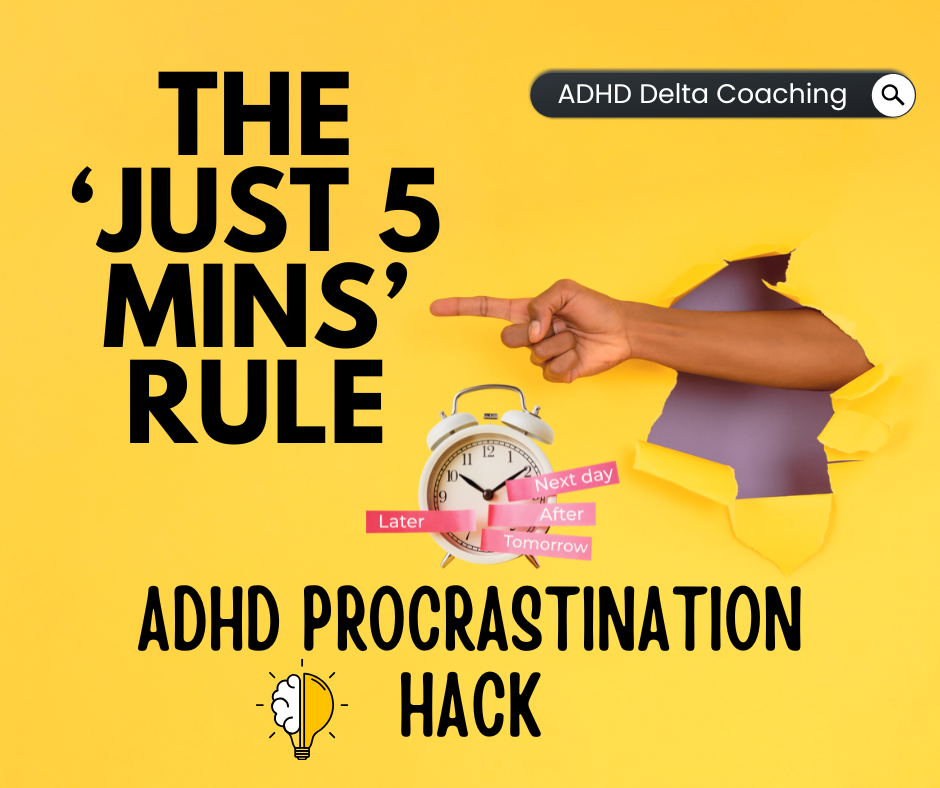
Tell yourself: I will only work on this daunting project for five minutes.
Set a timer. If you stop at five minutes, you win! If you get sucked in for 45 minutes, you win even bigger. The crucial thing is that you made the start feel insignificant.
3. Make It Visible and Slightly Annoying
Out of sight, out of mind is the ADHD mantra. The solution? Externalise your memory and motivation.
If you want to take a new vitamin: Put the bottle directly next to your toothbrush. Not in the cabinet. On the counter.
If you want to practice guitar: Leave the guitar on its stand in the middle of the living room, not tucked away in the case.
If you need to pay a bill: Tape the envelope to the front door (yes, really).

The slight visual inconvenience acts as a reminder that your brain can’t filter out.
4. Optimise for Interest, Not Importance
Trying to force yourself to do boring things is a recipe for internal rebellion. When possible, inject novelty, urgency, or fun into the task.
Gamify: Can you race the clock? Can you put on a specific "work playlist" that only plays for that task?
Body Double: Schedule a Zoom call with an accountability partner where you both just silently work on separate tasks. Their presence is the scaffolding.
Theme It: Can "cleaning the kitchen" become "The Great Countertop Rescue Mission" while listening to 80s movie soundtracks? Sometimes, a little theater is all it takes.
This year, let's skip the big, guilt-inducing resolutions. Instead, let's be kind to our wonderfully chaotic brains. Find the small, interesting adjustments that make life slightly easier, and then give yourself a massive high-five just for trying. That, my friend, is a resolution you can actually keep.
The Next Step: Your ADHD-Friendly Toolkit
Reading about these strategies is the first step, but putting them into action requires scaffolding built specifically for your brain. To help you translate these tiny adjustments into a sustainable routine, I've created two essential resources:
An ADHD-Friendly Weekly Plan That Doesn’t Fall Apart by Wednesday: This isn't a rigid schedule; it's a flexible template designed to prioritise energy, manage decision fatigue, and incorporate mandatory "reset time."
3 Ways to Reset Without Starting Over (for ADHD Brains): When the "All-or-Nothing Trap" tries to convince you that one missed step means the whole system is ruined, this guide gives you immediate, low-effort strategies to pivot and restart without guilt.
Ready to build the architecture your brain deserves? Click below to download your free ADHD-Friendly toolkit and finally make this the year your habits stick.
If this resonated, and you’d like support with building systems that actually fit your brain or your family, ADHD coaching can help you do this with less trial and error.